
Osaka vs Kyoto: Which City Should You Visit or Stay In?
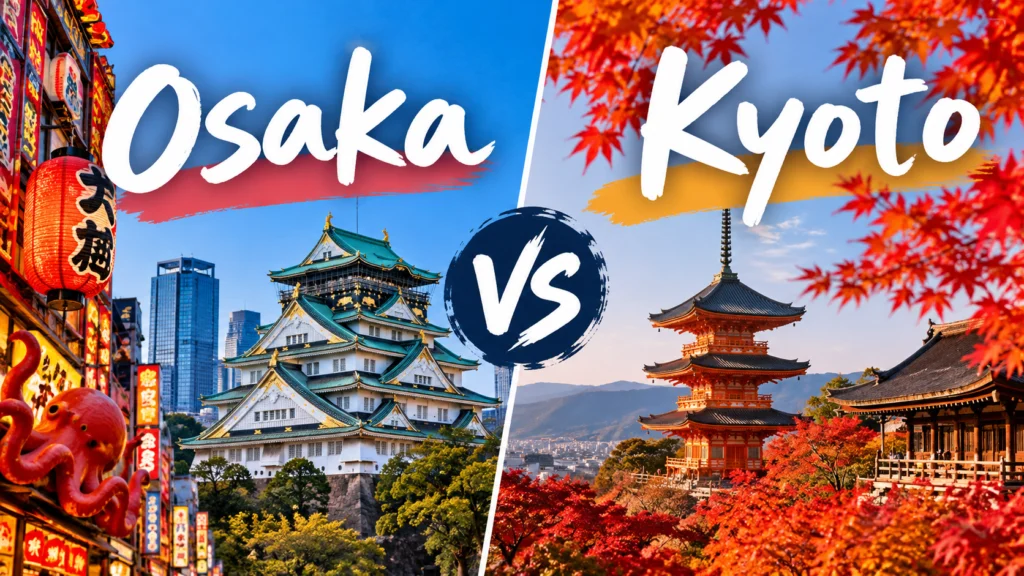
Quick answer: Kyoto and Osaka are close geographically, but they feel surprisingly different. You can enjoy both on one Japan trip; the smarter choice depends on whether you most value shrines and gardens or food, nightlife and convenient transport.
Quick comparison: what makes each city different?
Choose Kyoto if you want atmospheric temples, traditional neighborhoods, gardens, tea culture and quieter walks away from the busiest attractions. It is a strong choice for a first trip focused on history and photography. Choose Osaka if food, nightlife, shopping, bright signs and a lively city base appeal more to you. The official Osaka tourism guide highlights Dotonbori and the wider Minami area for entertainment and food.
The two are not rivals for every traveler: they sit close enough together that a combined itinerary is usually realistic if you have several days.
How to travel between Osaka and Kyoto
Frequent rail services connect the two cities, but the right train depends on your exact stations. Kyoto Station, JR Osaka Station, Shin-Osaka and Namba are distinct places. JR, Hankyu and Keihan routes serve different districts; the shortest train ride on a timetable is not necessarily the quickest door-to-door journey.
As a broad planning allowance, many central Osaka-to-Kyoto journeys take roughly half an hour to an hour by railway, with further local transfers or walking. Check a current timetable and ticket price for your actual hotel and destination. Do not buy a Shinkansen ticket simply because the two names appear on a bullet-train map: local or private railway services may make more sense for these distances.
Where should first-time visitors stay?
Kyoto Station area can work well for travelers using intercity trains and early trips. Areas around central Kyoto may feel more convenient for dining and evening walks, but reaching specific temples can still require buses, subways or time on foot. Osaka Station/Umeda is a practical transport hub, while the Namba area suits travelers prioritizing Dotonbori, shopping and late meals.
There is no universal winner on hotel price. Compare actual dates and locations. A cheaper room far from the attractions you want can cost extra in time and transport. If you plan several Kyoto sightseeing days, staying in Kyoto may be more relaxing than making a return trip from Osaka each evening.
Two-day itinerary ideas
If you spend two days in Kyoto: put one major temple district in the first day's morning, add nearby streets and a relaxed meal, and use the second day for a different part of town. A visit to Fushimi Inari can be planned independently of a western Kyoto trip.
If you spend two days in Osaka: choose one day for the Namba and Dotonbori area, then spend another day on a different neighborhood, park or museum according to your interests. Osaka Castle grounds, food streets and shopping streets do not all need to be squeezed into a single afternoon.
For a four-day Kansai visit, two nights in Kyoto and two in Osaka is one reasonable example. Moving hotels also takes time, so one base with day trips may be better if you dislike packing.
Which city is cheaper?
You can walk some public streets and open spaces free of charge in either city. Kyoto's individual temples and gardens may charge admission; Osaka's food and shopping spending depends heavily on your choices. Restaurants, hotels and transportation all vary by district and season, so there is no trustworthy fixed statement that one city is always cheaper.
For a usable budget, compare live hotel rates for your dates, list specific paid attractions, estimate train and subway fares for your likely routes, and set a daily food allowance. If you are moving between hotels, decide whether luggage forwarding is worth the extra cost.
Crowds, weather and common planning mistakes
Kyoto's official tourism site warns that buses serving famous sightseeing spots can become crowded at peak seasons. It suggests using rail as part of the route rather than relying entirely on direct buses. Kyoto also provides official congestion forecasts and area advice. Osaka's Dotonbori district has its own peak evening crowds, so traveling at an earlier hour or exploring side streets can be more comfortable.
On rainy days, choose museums, covered shopping or one compact neighborhood instead of committing to several outdoor stops. For autumn visits, see our Kyoto foliage planning guide. Most importantly, do not underestimate the time spent finding platforms, checking in at hotels and crossing large stations.
Official sources
Reviewed October 25, 2026. Transport options, prices and opening hours vary by the date and facility.